

Monday, February 27, 2017
Dangerous Skies
We got one of those automated calls from the County Emergency Services office the other day that said a tornado warning was in the area and we should head for a basement or shelter. I looked out the window and while it appeared there were stormy gray skies on the horizon, there was no real wind. We waited and eventually we got a few waves of heavy rain, no hail like they got to the north, and no tornado touchdown anywhere, thank goodness. But we did get a magnificent sunset.

Saturday, February 25, 2017
The Jungle
I was concentrating on a digital course that I purchased about well being and meditation --- trying to take my life more seriously. Meditation is not something I can easily apply to my scattered personality. I had my earphones from my laptop on while listening to some 30-something with a very compact body tell me to breathe from my belly and count to 10 on the inhale and 10 on the exhale. She suggested that I place my hands on my belly which was a distraction as I wondered about how ample that part of my body had become. It was at this moment of mixed concentration that I heard a loud thump coming from the the kitchen.
I used to have children at home and loud thumps are something I do not instinctively screen out while trying to meditate.
I walked to the kitchen and saw a small cloud of gray and white feathers embedded in the outside window screen.
I hurried outside to see if a bird was lying in the lawn, and instead saw what I guess was a Cooper's hawk (could have been a Sharp-shinned) with something small in its claws flying into the high tulip poplars. To my right I saw another Cooper's hawk flying to another tree. By the time I had run inside to get binoculars and back outside again, they were both gone.
Working together they had captured a titmouse that was hanging about my bird feeders. Titmice are erratic birds that seem to easily fly in distraction with their fellow birds. An easier prey for this excellent flying hawk. The Cooper's hawk kills its food by squeezing it to death rather than tearing it with its beak!

Life in the jungle once again reared it's honest head and some baby Cooper's hawks will be fed tonight or perhaps this was a courting of a male to feed his female on this pre-spring week.
I hurried outside to see if a bird was lying in the lawn, and instead saw what I guess was a Cooper's hawk (could have been a Sharp-shinned) with something small in its claws flying into the high tulip poplars. To my right I saw another Cooper's hawk flying to another tree. By the time I had run inside to get binoculars and back outside again, they were both gone.
Working together they had captured a titmouse that was hanging about my bird feeders. Titmice are erratic birds that seem to easily fly in distraction with their fellow birds. An easier prey for this excellent flying hawk. The Cooper's hawk kills its food by squeezing it to death rather than tearing it with its beak!

Life in the jungle once again reared it's honest head and some baby Cooper's hawks will be fed tonight or perhaps this was a courting of a male to feed his female on this pre-spring week.
Tuesday, February 21, 2017
Blue Eyes
Below are photos I took in the late afternoon, yesterday, of corn speedwell or birds eye speedwell (Veronica arvensis). The blossoms are very small and I had to lie in the cold damp grass to get these. The seeds germinate in the fall and grow slowly throughout the winter and then really put on a show in the very early spring as they take over the more shady parts of the lawn. Then they die back in the summer. Slender speedwell, similar, spreads by stolons. This blue baby is abundant in our unsuccessful lawn as we do not use weed killer or fertilizer unless it is absolutely necessary! Our lawn is mostly mowed weeds. Corn flowers seem to grow almost anywhere in the U.S., so you may have some in your lawn.


For a weed they are really quietly lovely and the early pollinators seem to find them essential.
And below is a photo painting. While it is a challenge using the mouse to paint light and dark and colors I have fun creating things that can be immediately erased when I make an error.

And below is a photo painting. While it is a challenge using the mouse to paint light and dark and colors I have fun creating things that can be immediately erased when I make an error.

Saturday, February 18, 2017
Peeking and Peaking
Blossoms are peaking everywhere in my yard, The hellebores have been really gorgeous all week and will be face forward in the week to come.


I have three types. Some open full faced and others hang like bells.


In just a few more days the daffodils will be blooming. They already are sunny and upright in my neighbors yard.
Tuesday, February 14, 2017
Do You Smell That?
Each morning I am now greeted by Meyer lemon blossom smells. The tiny deformed tree is now covered with fragrant hope. I looked for an older photo that I had posted on this plant and could not find it. It was a sad sack for sure.

The tree was about a foot and a half high and is not much higher now. Back then it had about a dozen leaves on it and 5 or six mostly bare branches. I transplanted it and fertilized it and left it out on the sunny deck keeping it watered. Because our climate gets possible first freezes in November I brought it inside and bought some grow lights and kept it near a sunny window and kept it watered and fertilized. It rewarded me with the hundreds of blossoms above. These will mostly fall and not set even though they might have tiny balls of pretend fruit at the back end of the blossom. The tree is just too small to support much fruit.


The blossoms do start with a lovely exotic fragrance. But as many are fading the smell flagrance can be a bit overwhelming and begins to take on a more fermented odor. It is starting to fill the kitchen air and overpower the lamb chops I am cooking.

Above is my citrus grove in the corner of my kitchen. The tall tree to the back is a kaffir lime. It does not produce much fruit but since I cook with the leaves in Thai food it is just what we want. The middle is the calamondin orange which is really sour like a lime or lemon but with an orange flavor. It can produce twice a year sometimes. And while they have lots of seeds and are small, they are fresher than anything we can buy at this time of year. We pick them off the tree and use them in drinks or squeeze over fish or on salad throughout the winter. If there are some leftover I make a calamondin cake. The small tree to the front is my Meyer lemon which is full of blossoms now. The grow lights which we purchased this year and that are on a timer made a big difference in the mite disease problem we used to have and the leaf drop due to lack of light.

The tree was about a foot and a half high and is not much higher now. Back then it had about a dozen leaves on it and 5 or six mostly bare branches. I transplanted it and fertilized it and left it out on the sunny deck keeping it watered. Because our climate gets possible first freezes in November I brought it inside and bought some grow lights and kept it near a sunny window and kept it watered and fertilized. It rewarded me with the hundreds of blossoms above. These will mostly fall and not set even though they might have tiny balls of pretend fruit at the back end of the blossom. The tree is just too small to support much fruit.


Sunday, February 12, 2017
Being Patient
The storm up north has brought in a bunch of house finches to the feeders as they fled from the heavy snows and colder weather. We usually have a few, but this morning there were many. Life has gone here as normal without the nasty winter weather.


This is a photo I took years ago. (I was too busy to get my camera this morning.)
The trees are confused as well because our mostly 50 F degree weather has them wondering if they forgot to mark their calendars for the day of spring. While day length is the primary trigger, this warmer weather does get some sap flowing early and the yellow-bellied sap sucker is busy at the front yard with my sugar maple.
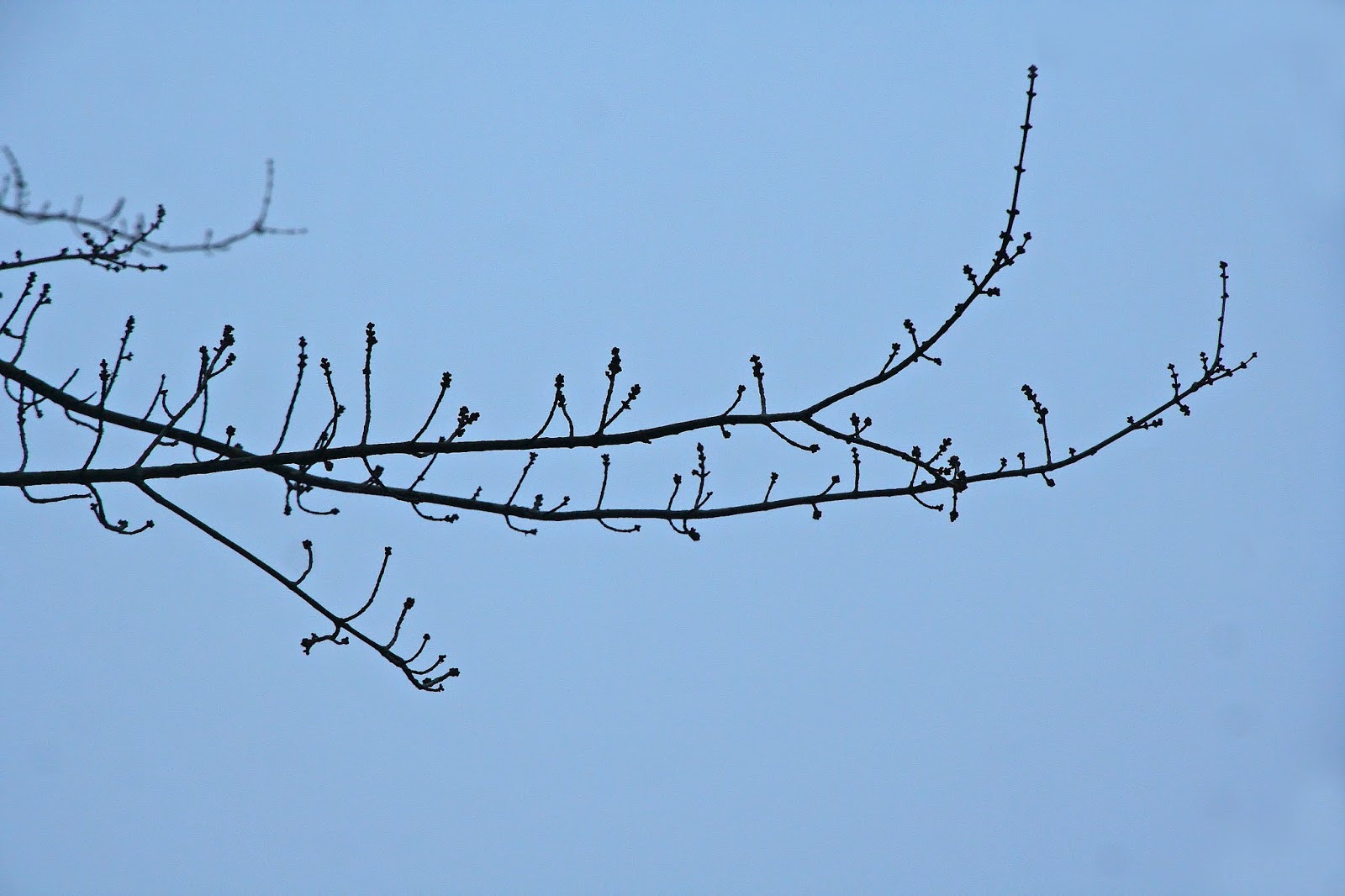
Some trees look like they are ready to bud, but the ends are still hard and dark, so not as ready as they appear upon closer inspection.

Things are still a misty, greenish gray like a Sherlock movie without that potential for danger, just the exotic sense of mystery. This poor dogwood at the edge of the main road was hit by the mower when it was small and struggles each year to get upright. The two in the distance are newer and were planted by the landscapers last year. I am waiting for spring dogwood blossoms to cover the branches.
Patience.


Wednesday, February 08, 2017
It is Like a Sponge or a Box of Spaghetti
Today is the second day with temperatures in the warm 60s F. In and off itself not a fact of global warming, but another chain in the link of a very mild winter which is another factual example (along with that YUGE breakin the ice shelf up North that is now 17 miles long.) Yet this post is not about climate change.
I put out some bird feed in my bare feet on such a warm morning and then stood still for a minute or two and heard the song of the bluebirds just at the edge of the woods. Amazing. Singing! I am hoping they are not getting in the mating mood as we have many weeks of cold weather ahead. We are actually supposed to get snow tonight!

Anyway, this got me thinking about bluebirds in specific and in general. Birds with yellow or red feathers get their pigment from food they eat. Do bluebirds do the same? Your first thought is blueberries, right? But the science community says the blue color in blueberries is destroyed in the digestion process so the answer is "no".

So I did some reading. I found the answer and while the reason is a bit complicated, my readers are intellectuals and love this stuff so I will share. Birds that have blue feathers in part or whole have changes in that colored feather itself as it grows. Inside each feather cell is stringy keratin molecules that separate from the water in the cell, something akin to oil and water. "When the cell dies, the water dries away and is replaced by air, leaving a structure of keratin protein interspersed with air pockets like a sponge or a box of spaghetti. When white light strikes the blue feather, the keratin pattern causes red and yellow wavelengths to cancel each other out, while blue wavelengths of the light reinforce and amplify"...and return to your eye as blue.

Difference in shapes and sizes of the air pockets mean different shades of blue. Therefore the color is not a pigment in the feather itself but a light reflection.
Why have the birds evolved this way? Scientists don't really know but they theorize the bluest blue represents health to the female or perhaps just plain beauty. OK. You did not waste your time here today. You learned something new unless you already knew.

I put out some bird feed in my bare feet on such a warm morning and then stood still for a minute or two and heard the song of the bluebirds just at the edge of the woods. Amazing. Singing! I am hoping they are not getting in the mating mood as we have many weeks of cold weather ahead. We are actually supposed to get snow tonight!

Anyway, this got me thinking about bluebirds in specific and in general. Birds with yellow or red feathers get their pigment from food they eat. Do bluebirds do the same? Your first thought is blueberries, right? But the science community says the blue color in blueberries is destroyed in the digestion process so the answer is "no".

So I did some reading. I found the answer and while the reason is a bit complicated, my readers are intellectuals and love this stuff so I will share. Birds that have blue feathers in part or whole have changes in that colored feather itself as it grows. Inside each feather cell is stringy keratin molecules that separate from the water in the cell, something akin to oil and water. "When the cell dies, the water dries away and is replaced by air, leaving a structure of keratin protein interspersed with air pockets like a sponge or a box of spaghetti. When white light strikes the blue feather, the keratin pattern causes red and yellow wavelengths to cancel each other out, while blue wavelengths of the light reinforce and amplify"...and return to your eye as blue.

Difference in shapes and sizes of the air pockets mean different shades of blue. Therefore the color is not a pigment in the feather itself but a light reflection.
Why have the birds evolved this way? Scientists don't really know but they theorize the bluest blue represents health to the female or perhaps just plain beauty. OK. You did not waste your time here today. You learned something new unless you already knew.

Saturday, February 04, 2017
Canadian Aliens
This is the time of year when "our" snowbirds come in just after the sun has set. They are returning from a day of gleaning the fallow cornfields or soybean fields that are dusted in bits of snow. These snowbirds do not reenter our portion of the creek with any diplomatic grace. They are loud and honking and splashing and seem to be arguing over the best place to land or which side of our small creek is theirs. They continue this diatribe into the early evening as we finish our dessert. Then they seem to grow quiet as we watch our television programs and later snuggle into our sheets reading before falling asleep. That quiet may last until about 2:00 or 3:00 A.M. when a fox or raccoon or shadow startles them once again in the gray night and the honking is like a football fan wave as it crosses the crowd on the river getting louder as it reaches our shore. TOUCHDOWN! In the early foggy morning I attempt to sneak down and get a few photos of the protesters who seem so small to have made so much noise. They do seem a bit blustery and rude for Canadians.

They stretch their necks trying to see me move down toward the dock and between their movement, the distance and the mist, my photos are poor.

They move away toward the center as I try to quietly approach, camera in hand.

The white "V" follows their white butts as they head in any direction away from my dock.

Those who have made it past the dock head out toward the mouth of the river, hoping that no duck blinds are populated with early morning hunters that may be scanning the foggy waters as these swimmers move to the open road. While there are hundreds, they are soon gone to other land until sunset once again.


Friday, February 03, 2017
Quiet but Perfect

During warmer months I spend time disappearing into the green woods of the eastern American woodlands. The rain is abundant and trees, shrubs, and ferns are full and lush. They tempt you off the path and into the fantasy world just beyond the rays of the sun where the verdant shadows are most intimidating and most seductive. The impossible feats of magic are possible here. The exotic that makes you gasp is just beyond that line of young honey locust trees, and if you walk very quietly, shhh, you might not scare the wood stream orchid that has emerged today. The hollow thunk is just the woodpecker at lunch on that huge fallen oak. The pungent smell is the earth moving in her sleep. That warm air is just the breath of the doe watching you secretly from behind the trees.
The photo above was posted years ago. Can you see the deer deep into the center of the photo below the distant light? I took this photo and did not know she was there.

Tuesday, January 31, 2017


Monday, January 30, 2017
It Was Wild
The earth seemed to be reflecting the human chaos and fear in this country right now. After a drive to the city we took a short trip to the C & O Canal where we used to walk or bike often when we lived nearby. In the photo below it looks like a pleasant fall time, but this was taken in the shelter of the woods and away from the open riverside.


There were a number of people out walking on this weekday. I photo-shopped away one jogger at the far end of the path.
The day was a normal cool for winter, but the 25 MPH whistling winds were making the day harsher and when the gusts reached 35 MPH I had to brace my feet to keep from being blown aside like a twig. Rain storms and some snow to the north had created an angry rush of liquid down the mountains into the Potomac River which runs beside the canal. We walked to the lookout, a cement platform where emergency helicopters sometimes land to rescue a fearless kayaker or hiker that has fallen or is drowning.

Here the river is wide and deep and deceptively calm. I turned the photo into a painting above.

But just down the towpath and as we followed a trail to a bridge that crosses over rocks on one side of the river, chaos reigned. The sound of the rushing river competed with the sound of the shushing wind. In the photo below I am crossing the bridge and you can see my shadow in the lower right. As I raised my camera a gust caught me by surprise and I almost toppled.


Days when I feel overwhelmed, it seems that Mother Earth can take my hand and make me feel even so much smaller.


Friday, January 27, 2017
Seed Freak
I am a seed freak. I love planting seeds, watching plants grow and reading about how to propagate different seeds. I know the difference between open and closed pollination. I know the difference between seeds from hybrid and heirloom plants. I also love seeds because they are fun to look at, rub in your hands, add to collections in glass bowls and for photography. I also love and respect science and scientists and do not blame them for what I write below.


Climate change will impact the growth of plants and the production of seeds. Seeds were originally here as the earth was formed and evolved slowly and naturally. Next farmers hybridized seeds to make evolution more controlled and faster or they moved plants into different areas. Then big business came along with their scientists and laboratories and created GMO seeds and then claimed they now own those seeds. Today a handful of companies own the global seed supply.

While that might be concerning it is additionally concerning that 93% of seeds have been lost in the last 80 years. Those are the seeds that might have had a genetic resistance to some global epidemic of a virus, or fungus or resistance to flooding or drought. We now have the technology to implant that feature, but the seeds with the DNA are gone, gone, gone. Read about the potato famine in Ireland to better understand why that is important.

According to one source "If you were alive in 1903, you would have been able to choose from more than 500 varieties of cabbage, 400 varieties of peas and tomatoes, and 285 varieties of cucumbers.
Eighty years later in 1983, the varieties had dwindled sharply, to just 28 varieties of cabbage, 25 varieties of peas, 79 for tomatoes, and just 16 varieties of cucumbers."

"the Big Six chemical/seed companies [Monsanto, Bayer, Dow, Syngenta, DuPont and BASF] have increased their cross-licensing agreements to share genetically engineered traits, strengthening the barriers to entry for smaller firms that don't have access to these expensive technologies."
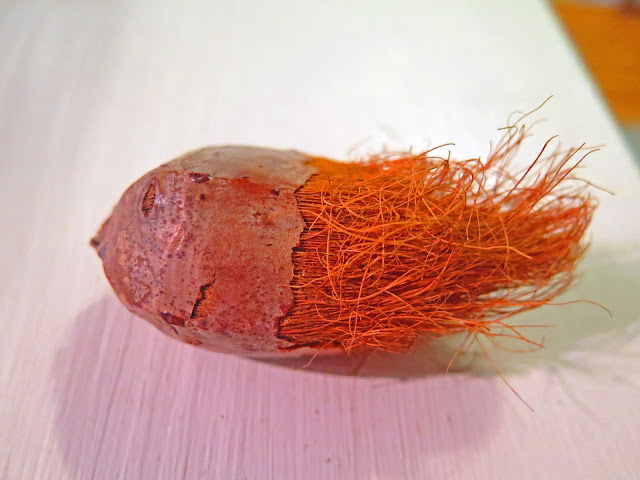
In an executive meeting with Monsanto executives, Anderson consultants described Monsanto's goals as a world with 100 percent of all commercial seeds genetically modified and patented. It appears they are almost there. As a result seeds are now pretty expensive and there are criminal laws against seed propagation for many seeds.

Seeds are important for the survival of all life. Humans depend on seeds for food, medicine, and unknown inventions and solutions to mankind's future problems.


"the Big Six chemical/seed companies [Monsanto, Bayer, Dow, Syngenta, DuPont and BASF] have increased their cross-licensing agreements to share genetically engineered traits, strengthening the barriers to entry for smaller firms that don't have access to these expensive technologies."

I posted this because I was at a recent gardeners' seed swap for the public where commercial and non-commercial seed were available for trade and to give away along with a presentation on how to save and propagate seeds. It happened at the local public library. This has to be carefully done insuring that no GMO/hybrid seeds are included unless they are in the original commercial package and that no seeds are sold!
USDA cracked down on one library years ago that was not careful in their seed bank collection and they were required by law to destroy their entire library of seeds as this could lead to "seed terrorism." They were violating a 20o4 seed act. This is what happens when we let big business take over entire industries and care only about profits. One wonders what grannie would say when she was told she could not propagate her favorite flowers.
Wednesday, January 25, 2017
Bitter Fruit
It is a bitter world this month. My Meyer lemon has come forth with hundreds of buds and now even has a few blossoms. I got one lemon off this two foot high tree last year and hope by hand pollinating, since there are no crawling or flying insects in my house, that I will get more this year. I will have to manage removing if too many set as the tree is too small. The smell of the blossoms on this tree is overwhelming.


My Calamondin tree is has been busy for a month with ripening fruit and now we can pick one small one golden orb for our drinks in the evening and I will soon have to do some baking with this fruit and freezing the rest of the abundance.


Both of these are bitter juice fruits, but such a surprise in taste and smell in the short days of winter.
Yes these are not in the Room Without Walls, but in a little over two months they will be back out there on my deck.
Friday, January 20, 2017
I am Blessed
I am so blessed to be living in a place where a sunset is a grand, magnificent, overwhelming piece of art certain days of the week. It reminds me that time is eternal for this earth.


Wednesday, January 18, 2017
My Small Reward

I walked out early this cold and damp winter morning being called by the silky veils of fog. Veils hung like thick webs between and behind the black and gray skeletons of my tall forest of trees. I was on a venture for silhouettes and contrasts and simplification to preserve with my camera. Since my big PC has died, I cannot have too much fun with photos, but as this weather gets more gloomy, I hope to have quiet days indoors learning with focus the quiet habits of a new PC which should arrive at the end of the week. Anyway, above is a photo of an Achillea or more commonly called milfoil which I took this very morning. Its name comes from the Greek character named Achilles as some of his soldiers used this relative of the yarrow plant to treat wounds. According to Wikipedia other more colorful names are allheal and bloodwort. There are over a thousand names under the genus Achillea! It tolerates a wide climate range in the U.S. growing from Texas to New England and across to Wyoming. This lavender/purple one is one type that is in my garden and still blooming in mid-winter and remains optimistic even after the 6 inches of snow over a week ago. Amazing how it tucked down and hung in there. We can learn things from these plants. It tends to spread a bit too much which means I will be digging bunches up for the spring plant sale.
I found it was a small pleasure to study the tiny colored faces while I heard the warning cries of the Blue-jays in the high oak tree and the rustle of brown leaves from some bird or squirrel just beyond the fence. I ignored how the spongy grass soaked my shoes and the damp tucked behind my ears.
Friday, January 13, 2017
Market Rush as the Fruit is Ripe
The next cold front, ice storm, snow storm, sleet storm is on its way. I hear the catbird in the ravine hissing about it. How does she know? I see the flickers gleaning my lawn of worms and bugs to last for the next few days. I also noticed that my holly trees were doing a dance. Beneath their boughs are carpets of berries. I went outside and could hear them falling like buckshot.

Next I also heard the twirping and tweeting of birds that were in that self same tree. Part of the tree was covered in Robins and breezy winds from the incoming storm made the photo blurry.
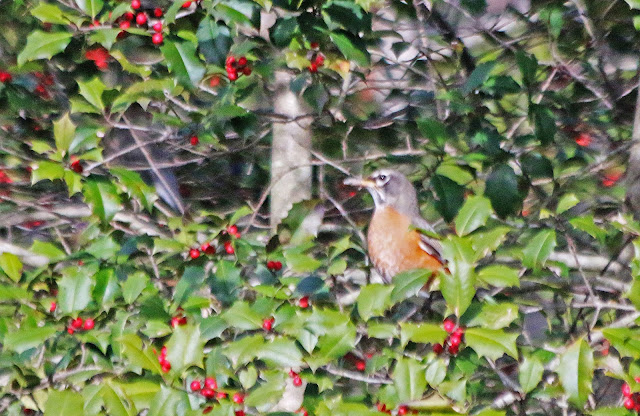
The rest of the tree was covered in cedar waxwings. They seemed to tolerate the robins. The waxwings were busy and squirmy and it was difficult to get a photo of their energy efforts. Maybe next time I will put on a jacket to avoid the cool air to keep me from shaking the camera and actually use a tripod! I could hear the tapping of each berry as it fell to the ground reminding me of those market shopping contests where food falls out of the cart as contestants rush down the aisle.


Incoming and outgoing and some actually stop and grab a bite.

Next I also heard the twirping and tweeting of birds that were in that self same tree. Part of the tree was covered in Robins and breezy winds from the incoming storm made the photo blurry.

The rest of the tree was covered in cedar waxwings. They seemed to tolerate the robins. The waxwings were busy and squirmy and it was difficult to get a photo of their energy efforts. Maybe next time I will put on a jacket to avoid the cool air to keep me from shaking the camera and actually use a tripod! I could hear the tapping of each berry as it fell to the ground reminding me of those market shopping contests where food falls out of the cart as contestants rush down the aisle.


Subscribe to:
Posts (Atom)